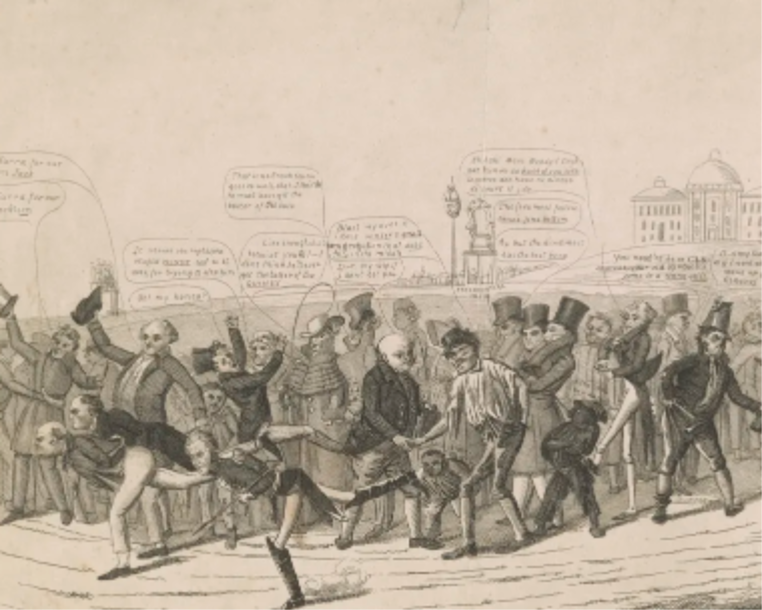
A velvet-gloved knife fight in the House: delegates reenact the contingent election of 1824–1825, selecting a president from Jackson, Adams, and Crawford. One state, one vote, thirteen to triumph, all under the austere gaze of the Twelfth Amendment.
Here is the problem the Constitution hands you: the Electoral College fails to produce a majority. Jackson arrives with the most votes and the most electors, which is impressive but not decisive. The House must choose among the top three. Each state delegation casts a single ballot. Twenty-four states. Thirteen wins the Republic and ruins someone’s evening.
Amid salon-worthy intrigue, they trade canals for consciences, tariffs for headlines, and patronage for principle, while the meters of corruption, sectional tension, and legitimacy tick like pocket watches at a very nervous ball. Move Pennsylvania without losing South Carolina, give Ohio a road and try to keep your hands clean. That is the trick. Win with math. Win with manners. Win the 13th so history can be told and the American experiment can go on.

Head Chair: Henry Rosenbach
Henry Rosenbach is a third-year Economics major at UC Davis, focused on how institutions shape everyday life. Growing up between Brazil and Europe gave him an early awareness of how policy shows up in ordinary things like housing, buses, and electricity bills, which led him to campus work at the intersection of student housing, transit reliability, and energy policy. He has been involved in speech, debate, and Model UN since high school and has stayed for the friends, the late-night prep, and the chance to argue about history for fun. Outside of MUN, you can usually find Henry exploring cities, overanalyzing public transit systems, hunting for good coffee, or reading about war and urban history. Henry is especially excited to chair the 1824–1825 contingent election committee because it sits exactly where his interests live: between formal rules and real power, with a constitutional system that is technically working while everyone inside it starts to question what “working” really means.